Marcasite necklaces have long been treasured for their elegant shimmer and distinctive vintage charm. Over the centuries, their designs have evolved alongside cultural aesthetics, jewelry-making techniques, and fashion trends. From delicate Victorian chains to geometric Art Deco pendants and bold contemporary statement pieces, marcasite necklaces tell a fascinating story of artistic transformation.
This chapter explores the evolution of marcasite necklace styles, highlighting the defining characteristics of each era, the craftsmanship techniques behind iconic designs, and the trends that continue to influence today’s jewelry market. mood ring color meanings
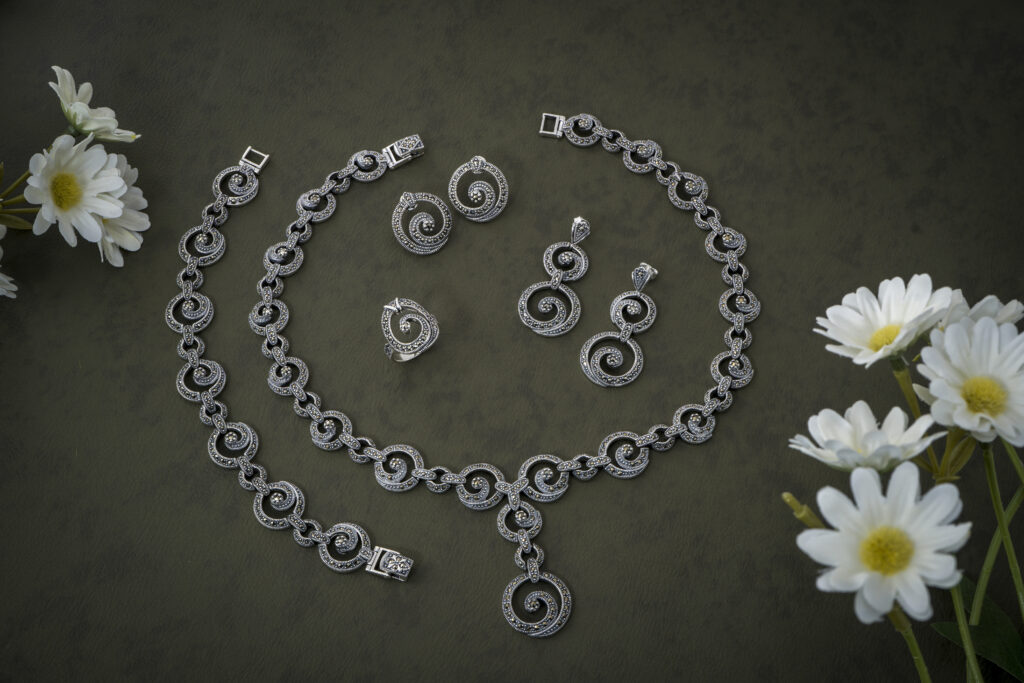
Early Origins of Marcasite Necklaces
Though most associated with European jewelry design, marcasite adornment dates back thousands of years.
Early uses:
- Ancient Greeks and Romans used pyrite (often mistaken for marcasite) for decorative jewelry.
- During the Middle Ages, marcasite-like stones were used in religious ornamentation.
- Renaissance designs incorporated faceted pyrite in silver settings.
These early forms laid the foundation for later stylistic traditions.
Victorian Era (1837–1901): Romance, Symbolism & Sentiment
The Victorian era marked the true rise of marcasite necklaces.
Distinctive design features:
- Floral motifs (roses, daisies, ivy)
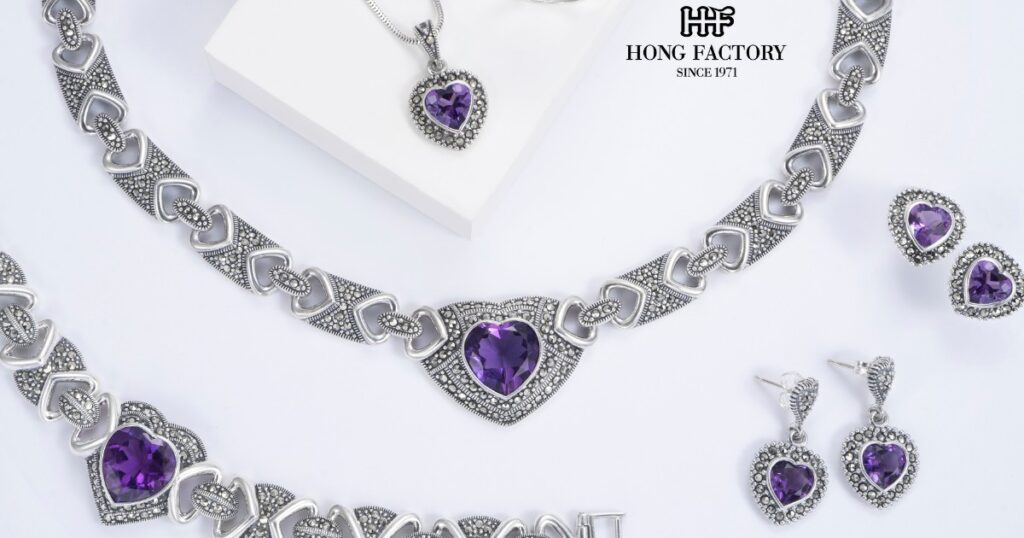
- Heart-shaped pendants symbolizing love
- Lockets adorned with marcasite detailing
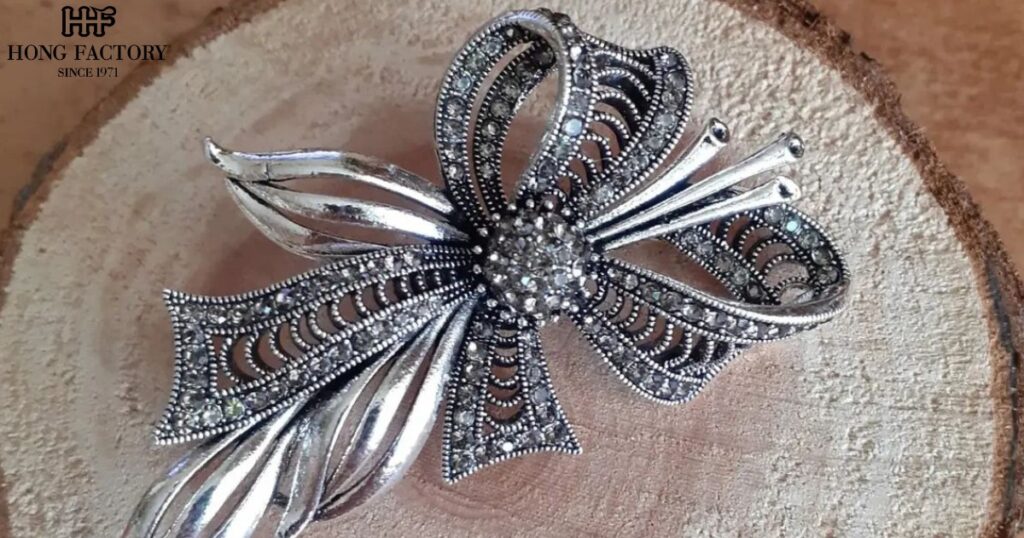
- Ribbon-like and bow-shaped silverwork
- Gothic influences in mourning jewelry
Victorians adored marcasite for its subtle, respectful sparkle that suited both romantic and sentimental themes.
Popular styles:
- Delicate chains with ornamental drops
- Cameo pendants framed with marcasite
- Filigree chokers with intricate detailing
Silver oxidation was heavily used to enhance contrast and depth.
Edwardian Era (1901–1910): Elegance and Lightness
Edwardian jewelry embraced refined elegance and airy sophistication.
Key elements:
- Lace-like filigree resembling fine needlework
- Soft curves and feminine motifs
- Pearls combined with marcasite
- Regal, delicate necklace silhouettes
Edwardian necklaces often incorporated platinum-like silver tones, making marcasite sparkle subtly and gracefully.
Art Nouveau (1890–1910): Nature-Inspired Fluidity
Overlapping with the Edwardian era, Art Nouveau brought organic creativity.
Features:
- Flowing, curvilinear designs
- Motifs such as lilies, dragonflies, and feminine silhouettes
- Marcasite used to accent graceful silver outlines
These necklaces highlighted artistic expression over geometric precision.
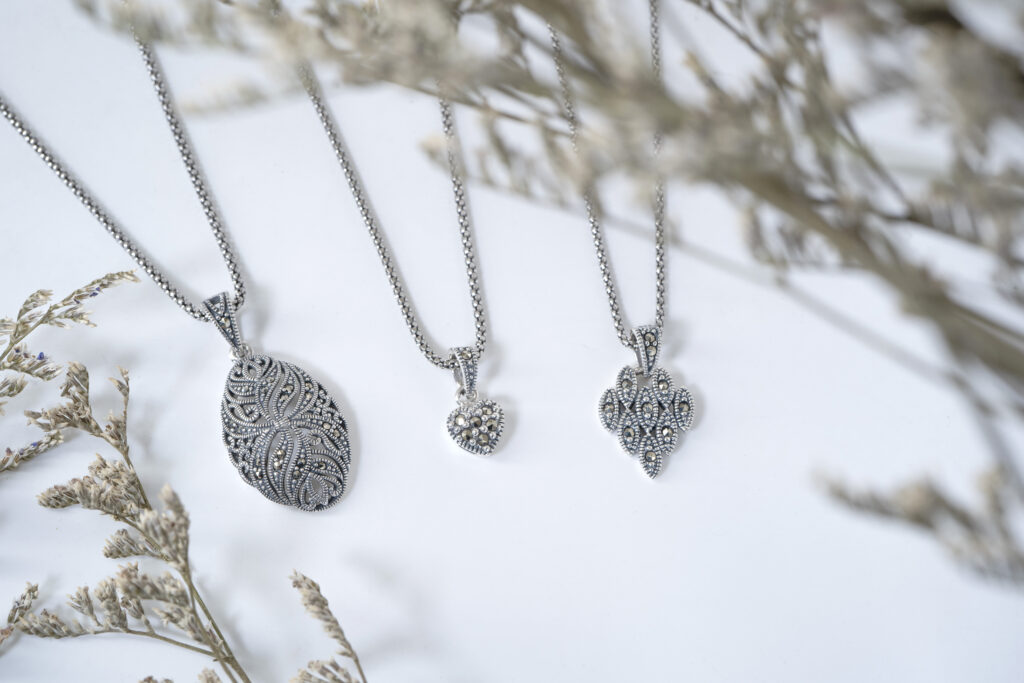
Art Deco Era (1920s–1930s): Bold Geometry & Glamour
Art Deco marks the most iconic period for marcasite necklaces.
Defining characteristics:
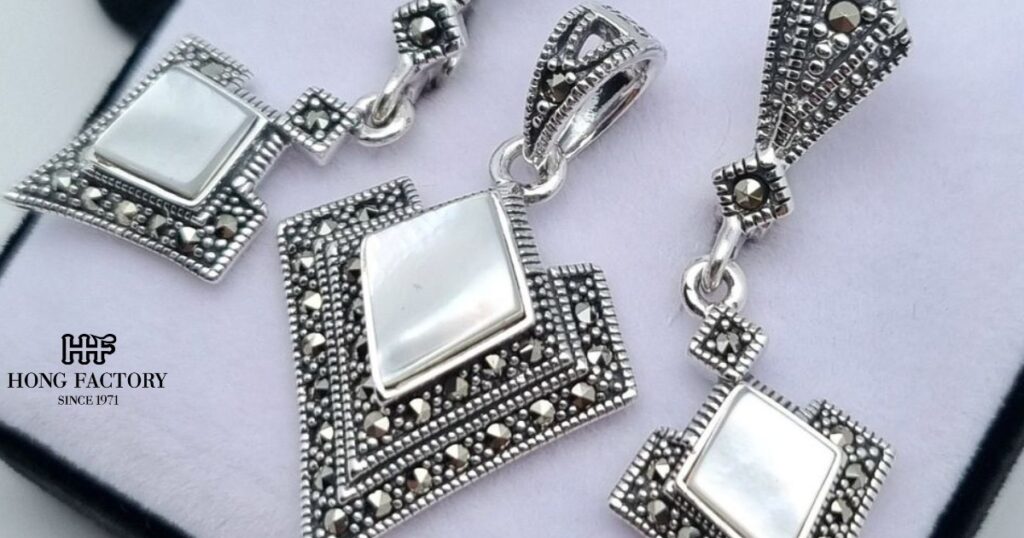
- Strong geometric patterns
- Symmetry and precision
- Black onyx paired with marcasite
- Stepped and layered pendant structures
- Fan, sunburst, and linear forms
Art Deco marcasite necklaces remain highly collectible today.
Common styles:
- Long pendant necklaces
- Linear drop necklaces
- Chokers with sharp geometric accents
The era reinvented marcasite as a symbol of modern sophistication.
Mid-Century (1940s–1960s): Simplicity & Everyday Wear
Post-war jewelry trends shifted toward practicality.
Traits:
- Smaller, understated designs
- Streamlined silhouettes
- Minimalistic patterns
- Affordable silverwork
Marcasite necklaces were designed for daily wear and accessibility.
Late 20th Century Revival (1970s–1990s): Vintage Nostalgia
The popularity of marcasite surged again during this period.
Influences:
- Renewed interest in Victorian and Art Deco aesthetics
- Rise of handcrafted silver jewelry
- Growth of tourist and artisan markets
Designers revived traditional motifs but updated proportions for modern wearers.
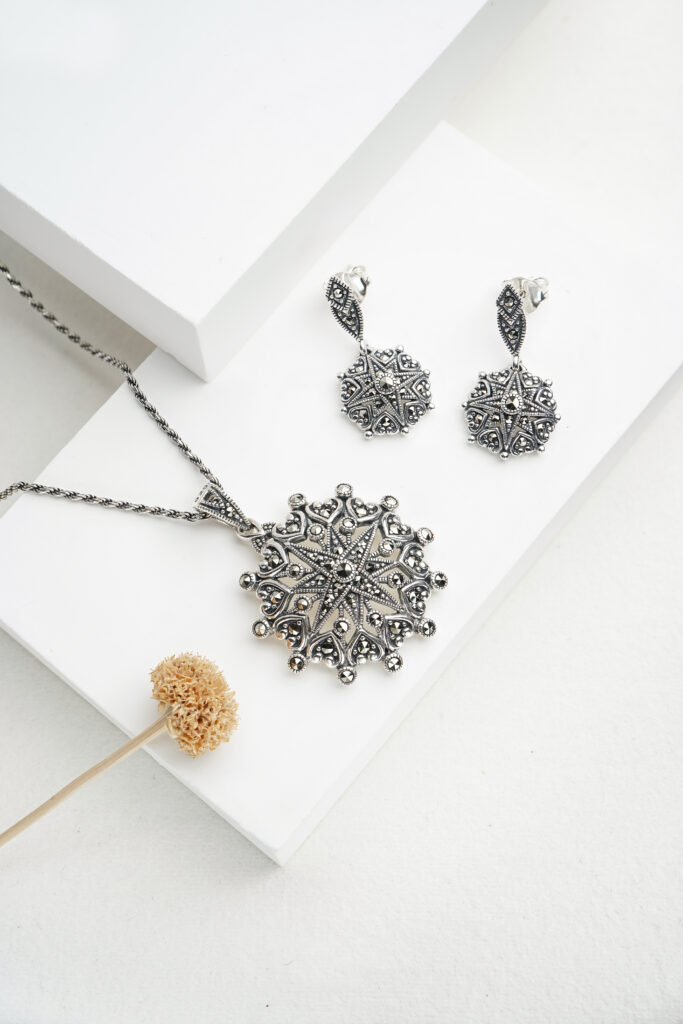
21st Century: Fusion of Vintage & Modern Innovation
Today’s marcasite necklaces embrace diverse design approaches.
Key trends:
1. Minimalist Modernism
- Simple silver forms
- Single-stone marcasite accents
- Lightweight everyday necklaces
2. Statement Pieces
- Bold, oversized pendants
- Heavy pavé surfaces
- Fashion-forward silhouettes
3. Mixed Material Designs
- Marcasite with enamel, resin, shell, gemstones
- Enhanced color contrasts
4. Art Deco Revival
- Precise geometric pendants
- Black onyx combinations
- Symmetrical drop necklaces
5. Nature-Inspired Modern Florals
- Stylized leaf and petal shapes
- Organic curves blended with contemporary lines
Marcasite adapts beautifully to both minimalist and maximalist aesthetics.
Types of Marcasite Necklaces Throughout History
1. Pendant Necklaces
The most timeless category.
- Heart pendants
- Geometric drops
- Ornate Victorian frames
2. Chokers
Often associated with Art Deco and modern fashion.
- Silver filigree chokers
- Symmetrical marcasite panels
3. Bib Necklaces
Dramatic and luxurious.
- Multiple rows of marcasite clusters
- Vintage evening wear essential
4. Lariat Necklaces
A modern reinterpretation.
- Elegant drop structure
- Minimalist sparkle
5. Medallion Necklaces
Popular in boho and modern eclectic styles.
- Round or oval ornate motifs
The Role of Craftsmanship in Necklace Evolution
Craftsmanship dictates whether a necklace feels antique, modern, or timeless.
Historical craftsmanship features:
- Hand-carved filigree
- Raised bead settings
- Heavily oxidized silver
Modern craftsmanship features:
- CAD precision
- Micro pavé stone setting
- Laser-cut silver patterns
Despite technological advances, marcasite necklaces still rely on hand-finishing for maximum beauty.
Symbolism in Marcasite Necklaces
Throughout history, these pieces conveyed emotional meaning.
Common symbolic motifs:
- Hearts → love and devotion
- Flowers → growth and femininity
- Geometric shapes → strength and balance
- Wings or feathers → freedom and transformation
Symbolic meaning continues to play a major role in contemporary designs.
Why Marcasite Necklaces Remain Popular Today
Reasons include:
- Versatility (day or evening wear)
- Elegant vintage appeal
- Adaptability to modern trends
- Affordability with a luxurious look
- Strong performance when paired with silver
Collectors and everyday wearers alike appreciate their timeless shimmer.
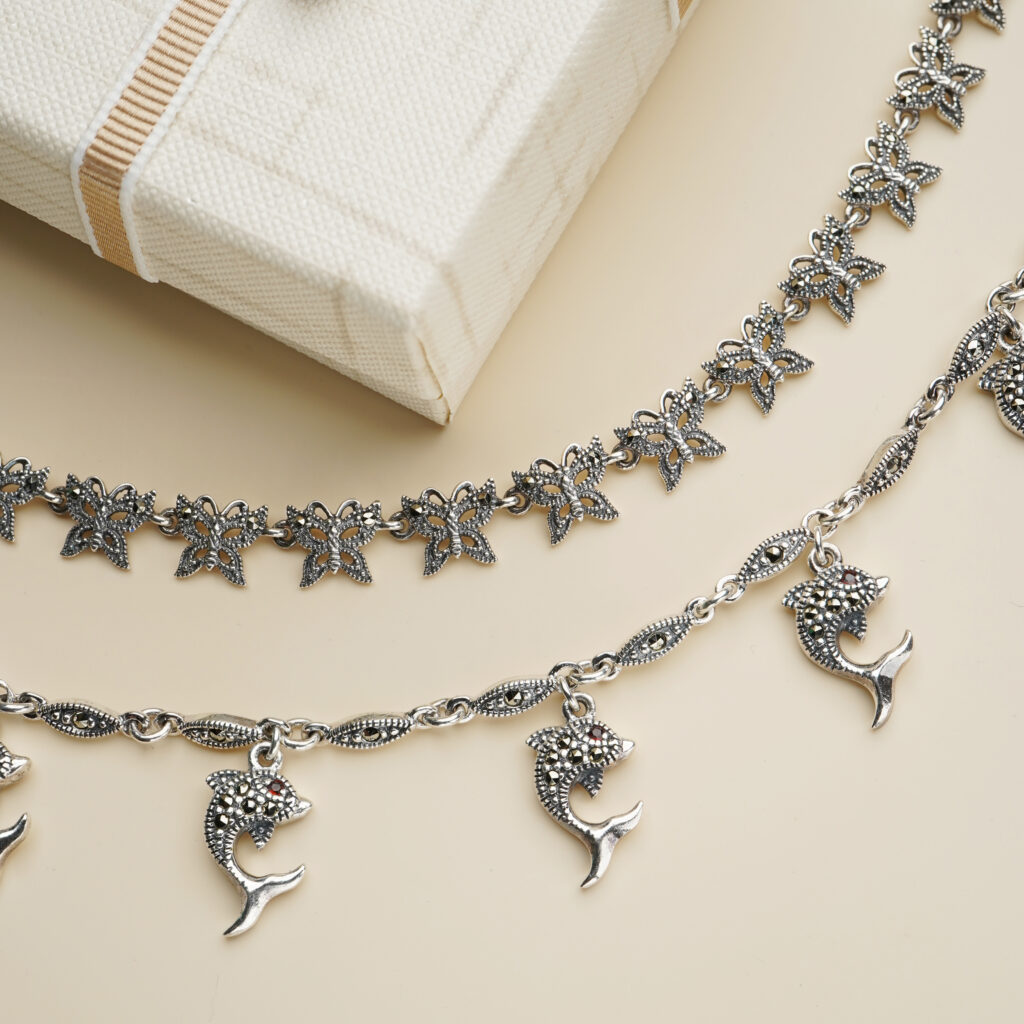
The Future of Marcasite Necklace Design
Future trends are likely to explore:
- Sustainable silver and ethically sourced stones
- Customizable pendant structures
- Mixed-material artistic statements
- Sculptural and architectural designs
- 3D-printed frameworks enhanced by hand-set stones
The fusion of contemporary innovation with historical charm ensures that marcasite necklaces will continue evolving.
Conclusion
From delicate Victorian pieces to bold Art Deco pendants and modern minimalist designs, marcasite necklaces have undergone a remarkable transformation. Each era introduced new aesthetics while preserving the core beauty of marcasite’s shimmering charm. Today, these necklaces stand as a testament to the enduring appeal of craftsmanship, heritage, and artistic reinvention.
In the next chapter, we will explore marcasite earring styles, tracing their evolution across historical periods and contemporary fashion movements.